

Share your coffee stories with us by writing to info@comunicaffe.com.
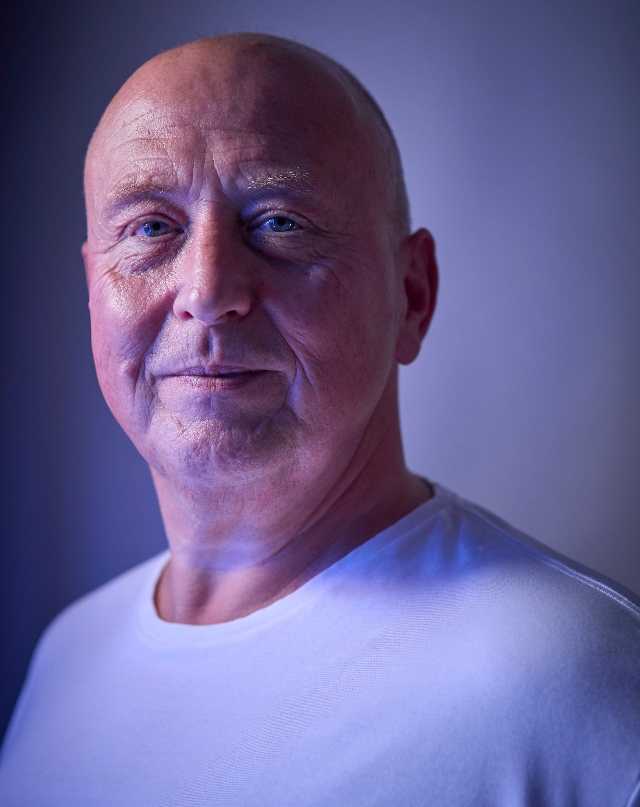
LONDON – Scott Martin, co-founder of Coffee Nation, helped transform the British coffee market by introducing the UK’s first premium self-serve espresso solution at a time when instant coffee dominated. By combining real espresso with fresh milk, Coffee Nation challenged assumptions about what vending-machine coffee could be.
After Whitbread acquired the business and rebranded it as Costa Express, Martin led its rapid expansion, growing revenues tenfold to $500 million. He helped pioneer the autonomous coffee retail model—one that later proved essential during the COVID-19 pandemic.

Under his leadership, Costa Express scaled to more than 14,000 machines, becoming a key asset in Coca-Cola’s £3.9 billion acquisition of Costa Coffee. To know more about his experience, we spoke to Martin directly.
What were the biggest challenges in the early days of Coffee Nation?
“The biggest challenge was customer perception. People assumed that coffee from a vending machine would be poor quality. In reality, they were often surprised by how good it was.

Even in the early days, our machines used fresh milk and real espresso. Technically, they made coffee in the same way a barista would, just without a barista assembling it. The challenge was convincing people that the coffee could be just as good as what they would buy in a café.
Ten or fifteen years ago, that was much harder than it is today. Back then, most coffee shops were making drinks by hand. Today, many cafés use super-automatic machines like Eversys, Thermoplan, or similar systems, so consumers are more familiar with automated coffee production.
Despite all the technical, operational, and capital challenges, perception around quality was the single biggest hurdle.”
What role did technology play in building the business?
“Our biggest inflection point was connecting our machines to the internet, effectively creating our own IoT system.
We made a conscious decision that we didn’t want a huge workforce, but we did want complete visibility and control. We needed to know that hundreds, and eventually thousand, of machines were delivering consistent quality, were stocked correctly, and were trading. The best way to do that was through the cloud.
By around 2008, we had developed our own cloud-based platform. Initially, it focused on quality and consistency. Over time, it evolved to manage menus, content, and recipes centrally.
At its peak, Costa Express had around 16,000 machines across 12 countries. That entire network could be managed by a team of about 10 people handling data from one location. We still had people on the ground in countries, but I could see real-time performance in Malaysia and the UK simultaneously. That level of control made the model scalable.”
How did Coffee Nation become Costa Express?
“We were not just building a business, we were creating an entirely new category. We were the first brand to put premium self-serve coffee machines into convenience stores, gas stations, and grocery stores.
Initially, we hoped this would give the category credibility. About eight years into the journey, Starbucks approached us, which triggered broader interest. It became clear that major coffee brands wanted to expand beyond traditional coffee shops.
Whitbread, the owner of Costa at the time, were particularly visionary. They saw that Coffee Nation could allow Costa to grow its footprint exponentially with far lower capital investment. The transaction moved incredibly fast: around ten weeks from first discussion to sale.
Once acquired, the business accelerated quickly because Whitbread brought two things we lacked as a private company: access to capital and a strong consumer brand. Back then, there was no social media, and brand-building was expensive and slow. Costa was already a household name in the UK, and that made a huge difference.”
How did Coffee Nation shape your thinking for Unity Coffee?
“One of the biggest lessons I learned is that when you create a new category, people often think you are solving a problem that doesn’t exist.
When we started Coffee Nation, people said there was no need for it: either use vending machines or go to a coffee shop. But my own experience told a different story. I was working at Unilever, driving up and down UK motorways, and I simply could not access good coffee when I needed it.
I see parallels with Unity Coffee today. The category is more understood now, but it’s also stagnating under the dominance of two or three large brands. It still requires belief, persistence, and the ability to take people on a journey.
You cannot change consumer habits overnight. You have to create a movement, build momentum, and allow time for it to take hold.”
What changes are shaping the future of coffee to-go and self-serve?
“Automation is creating a fascinating shift in the industry. Automated coffee machines have existed for years, Starbucks has used Thermoplan machines for over a decade, but they were often disguised to look traditional.
Now, a new generation of brands is fully embracing automation. Businesses like Blank Street in the US or Black Sheep Coffee in the UK openly embraces automation. In terms of both coffee and milk.
This flips the model. It raises big questions about how much automation is right, how humans add value, and what the customer experience should be.
What’s emerging is a hybrid model: automation delivers speed and consistency, while people curate the experience and product. If automation allows someone to make a beautiful flat white—with latte art—but much faster, that’s a win. It does not diminish craftsmanship; it enables scale.
Looking ahead, I do not think the future will be robot based. It’s high-quality coffee, delivered quickly, in smartly designed spaces. Having spent nearly three decades in coffee, I find the next five to ten years incredibly exciting. The industry is at a fascinating crossroads.”