
Share your coffee stories with us by writing to info@comunicaffe.com.
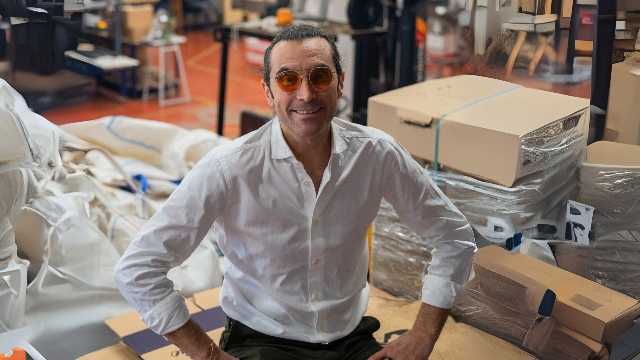
Matteo Borea, strategic consultant and owner of the La Genovese roastery in Albenga (Savona), offers an uncomfortable reflection on the future of the coffee sector.
The myth of quality as a strategy
by Matteo Borea
ALBENGA, Italy – “There is a sentence I’ve heard repeated for years at trade shows, courses, and conversations among roasters: “We focus on quality.” It has become a kind of mantra, an automatic answer to any question about positioning. The problem is that it no longer means anything.

When everyone claims to focus on quality, quality stops being a differentiating factor. It becomes the minimum requirement to enter the market, not a competitive advantage. It’s like saying “we use coffee beans” — obvious, otherwise what kind of roastery would you be?
The real issue is that many coffee entrepreneurs confuse technical competence with business strategy. They know everything about extraction, roasting curves, and processing (maybe). But they struggle to answer fundamental questions: what is my net margin per kilo? How much does it cost me to acquire a new customer? Why should a bar choose me instead of a competitor who is 15% cheaper?

The language that keeps us stuck
Look at how our industry communicates. Open the website of almost any roastery and you’ll find words like “passion,” “tradition,” “craftsmanship,” “premium blends,” “selected beans.” Words that say nothing, because everyone uses them.
Now compare this with how companies in other B2B sectors communicate. They talk about measurable results, ROI, problems solved, time saved. We are still talking about “fruity notes” to customers who really want to know whether that coffee will help them sell more at the counter.
I’m not saying sensory quality doesn’t matter. I’m saying it is necessary but not sufficient. And above all, it must be translated into a language the customer understands and values.
The numbers no one wants to look at
Over the past five years, the cost of green coffee has increased by 180%. Energy costs have exploded. Labor costs have risen. How many roasters have recalculated their real margins? How many have updated their price lists proportionally?
In my experience, the answer is: very few. Many have absorbed part of the increases in order “not to lose customers.” The result? Stable or even growing revenues, but margins in free fall. Companies working more, to earn less.
This is where the real problem emerges: if you don’t know your numbers, you can’t make strategic decisions. You’re navigating by sight, reacting to events instead of anticipating them.
The new rules of the game
The market is changing fast. EUDR regulations will require traceability and compliance. Large groups are consolidating, acquiring roasteries and market share. Consumers demand sustainability, but are not always willing to pay for it. Structural costs will not return to pre-2022 levels.
In this context, product quality is the starting point, not the finish line. Even in my own company, this journey is far from complete. We are still working to clarify our positioning, to align numbers, processes and communication. And that’s okay.
Because the real issue is not that change takes time. The real issue is refusing to admit that change is necessary.
In our industry, the most dangerous answer of all is still far too common: “We’ve always done it this way.” A sentence that worked when costs were different, competition was lower, and personal relationships were enough to retain customers. Today, it’s no longer enough. And continuing to defend that model is not tradition — it’s resistance to change.
The elephant in the room
There is a topic the industry doesn’t like to talk about: many artisanal roasteries do not have a sustainable business model. They survive by inertia, historical relationships, or the lack of immediate alternatives for their customers. But when the market becomes more competitive, when costs rise, when a more structured competitor enters the scene — they collapse.
This is not a matter of size. I know micro-roasteries that are extremely profitable, and medium-sized roasteries that are struggling. The difference lies in strategic clarity: knowing who you are, who you work for, how you create value, and how you capture it.
From artisans to entrepreneurs
Italian coffee has an extraordinary tradition. But tradition doesn’t pay the bills, doesn’t negotiate with suppliers, and doesn’t convince customers to stay when a more aggressive offer arrives.
The transition many roasters still need to make is from artisans to entrepreneurs. Continuing to refine the product, of course. But also starting to refine the business: processes, numbers, relationships, and above all, communication.
Coffee quality is no longer enough. It’s time to raise the quality of everything else.”
Matteo Borea