
Share your coffee stories with us by writing to info@comunicaffe.com.
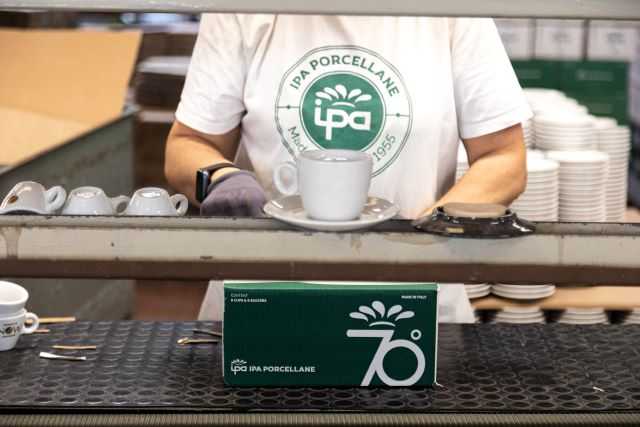
USMATE VELATE (Monza Brianza) – IPA Porcellane has been operating for three generations in the field of hard-porcelain production. In 1955 the company was creating artistic porcelain statues, then harnessed that know-how for the HoReCa sector. From founder Egidio Sala to the current general manager, Amedeo Sala, the pursuit of the perfect product —as impossible it may sound— remains the common thread running through this company, which has evolved from a craft operation to an industrial firm.
Currently, IPA Porcellane has a production capacity of 80,000 pieces per day.

70 years of IPA Porcellane: where did you start, and how far have you come?
“To tell the story of IPA Porcellane, we need to start with a central figure: my grandfather, Egidio Sala. His first business involved making cardboard tubes, which were in high demand at the time.
His entry into the porcelain world happened almost by chance, through my grandmother’s brother, Franco, who was already working in the field in Usmate—a historic hub of porcelain in Lombardy.

Out of that collaboration, in 1955, IPA Porcellane was born, launching an entrepreneurial
adventure that blended artistic flair with an industrial vision.
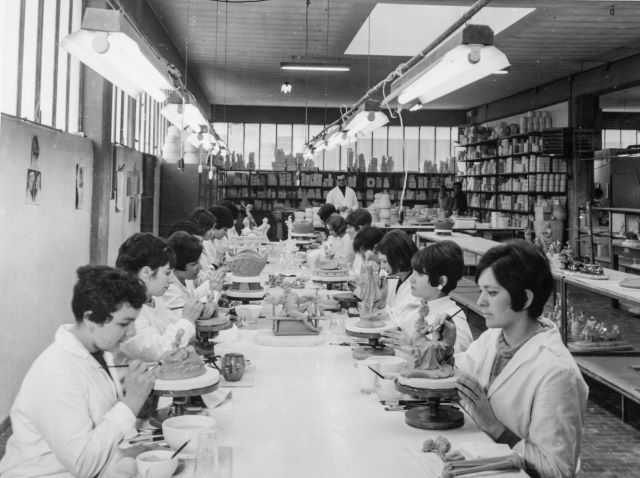
From statues to tunnel kilns
At first, we produced Capodimonte-style statues, all modelled and hand-decorated by a group of artists and artisans. They were works of art.
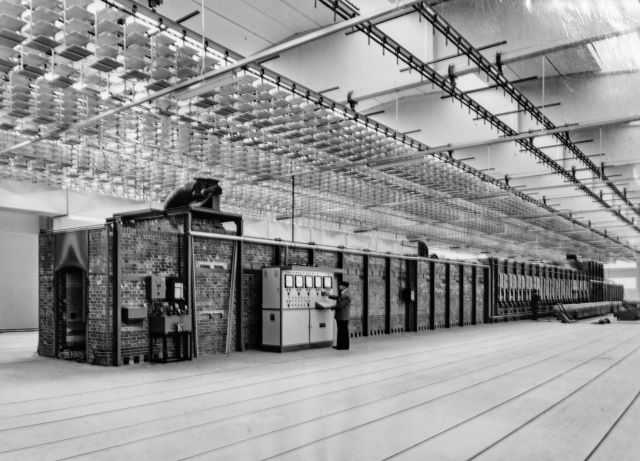
Shortly afterward, Franco and Egidio amicably parted ways. In the early 1960s, my grandfather gave free rein to his industrial genius: he invented jeggering and decorating machines, purchased a large tunnel kiln, and began to focus on the HoReCa industry—initially centered on tableware.
During the 1960s, our catalog was broader, we also sold plates and complete sets. But by the late 1960s, we decided to concentrate solely on the roasting market: cups and related accessories.
In the coffee-roasting sector, a cup is not just a tool; it becomes a way for a brand to express its identity; moreover it must satisfy precise functional requirements. It requires a delicate balance between aesthetics and technical performance. At first, we offered our own designs to customers, maintaining a certain level of customization through decoration.
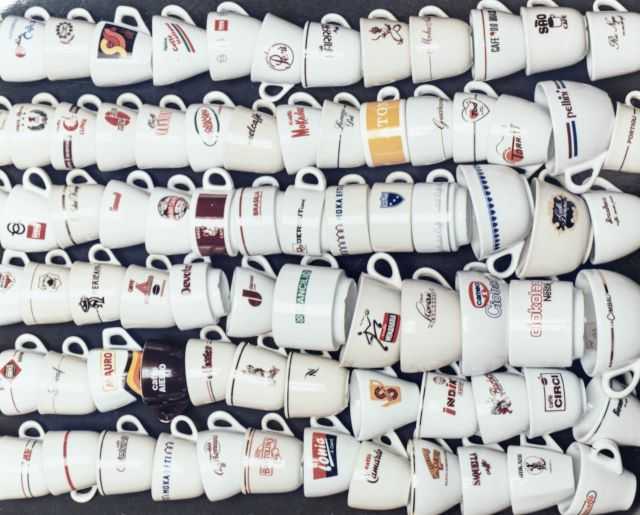
From the 1990s on, however, the largest and most attentive roasters began paying close attention to the result in the cup, requesting made-to-measure items to best suit their coffees. Today, we can describe ourselves as tailors of customised cups, offering this service not only to big players but to mid-sized companies as well.
(https://ipaporcellane.it/su-misura/).
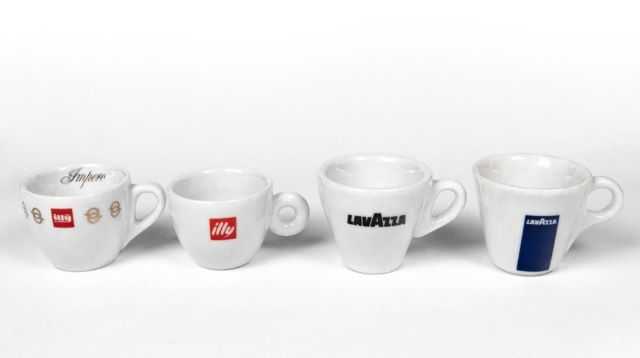
Focusing on a niche has allowed us to be extremely efficient while keeping all our production here in Italy, at our Usmate facility—making us, probably, the only factory in the world exclusively dedicated to serving the roasting industry.”
Technology and art in our DNA
“Since the 1980s, we have been developing in-house machinery for the automated application of decals, which were once applied by hand. We have continued building machines over the years—our latest decoration machine was inaugurated this month for example. With systems designed by our own engineering team, we can now print and apply decorations rapidly and precisely. This transformation grew out of a tangible need: to produce 300,000 cups with full-wrap decorations for a major client in just three months.
We have also been highly innovative in load handling, beginning in the early 2000s. We built automated lines to transport the clay mixture to the lathes (where we shape the cups), move the unfired cups to be glazed, and then feed them automatically into the kilns, where they are fired at 1400°C for an entire day.
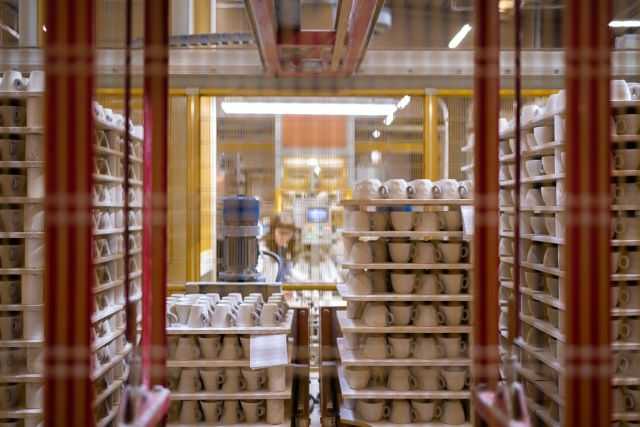
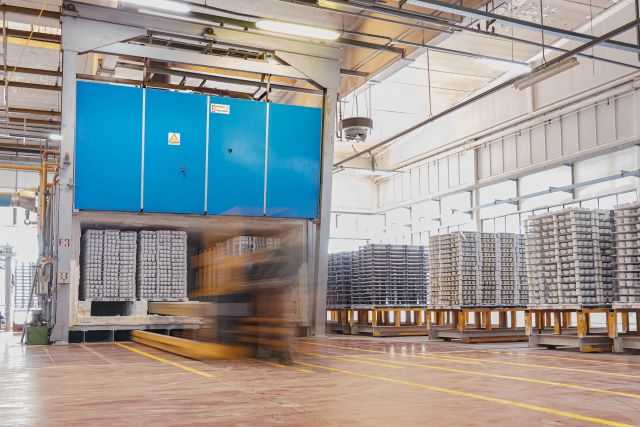
Our kilns themselves have evolved: we have moved away from tunnel kilns—long to set up and difficult to manage—towards chamber kilns, which are more flexible and reliable. This has allowed us to cope better with challenging periods such as the pandemic and the energy crisis. We are currently researching and analyzing even more innovative chamber kilns to further improve energy efficiency.
We are also introducing new finishes and technologies to expand our clients’ decorative options, including the introduction of 3D printing for increasingly intricate engraving. We develop almost all our technology in-house, tailor-made for our needs. This is a deliberate choice, consistent with our identity: we focus on a niche market, and what we do must meet the highest standards.
This proprietary know-how is what makes us more agile, faster, and closer to our customers’ needs Alongside technology and art, another hallmark of our DNA is the importance of family. We are a family-owned company now in its third generation. Today, Riccardo and Roberto serve as co-CEOs; I am also involved, as are my two cousins Sarah and Alice, who oversee production management and graphic design, respectively.”
What is the market like for companies like yours in Italy and abroad? Is there much competition?
“Production in Europe and Italy has decreased in recent decades. Within Confindustria Ceramica, there are only three Italian cup manufacturers left. Of course, there are competitors who import.
However, we are seeing a growing trend: customers increasingly want flexibility, customization, quality, and durability, plus a shorter supply chain to respond more quickly to continuous market demands—now the norm in this sector.
We have always shipped our cups worldwide through our clients and their international presence. In the last five years, we have focused more on direct exports, doubling its share in our total revenue, and we plan to keep growing that part of the business. In terms of total turnover, last year we reached 12 million euros, which is reassuring despite the challenges we have faced so far.”
How many Italian and international roasteries receive IPA cups?
“Our long experience in this sector means we have reached almost every Italian roastery over the years. Up to 2025, we have sold to more than 500 different roasters and, in the last three years, to more than 1,000 companies. We currently sell in 54 countries, and the most important markets—besides Italy—are France, Germany, Benelux, and Switzerland.
Beyond these, we are focusing on emerging markets to expand our presence.”
How important are design and functionality in the final product?
“Both are extremely important. The decorative and shape design of a cup is distinctive and a powerful conduit for brand communication. However, we must remember that it is also a working tool and needs to fulfill certain functions: in a café setting, a cup must be easy to serve and wash.
Sometimes I see cups in bars that are more suited to domestic use.
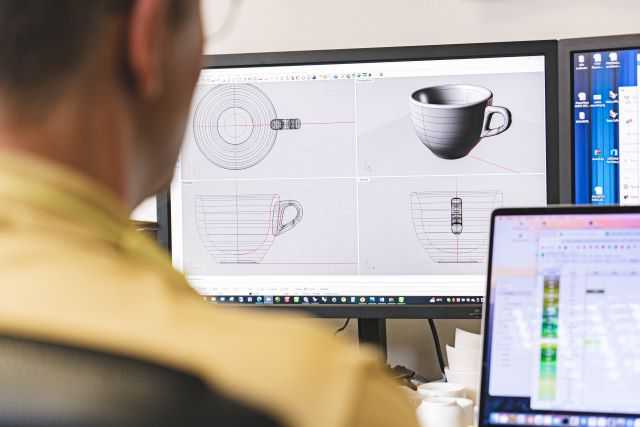
When a client proposes a specific design, we try to offer consulting on finding the right balance. Our modelers have a wealth of experience and bring the expertise of many previous projects. There is no single, absolutely “perfect cup,” but you can find the perfect cup for a specific need by weighing all the variables.”
Materials and energy consumption are a hot topic: how are you approaching sustainability?
“Clearly, sustainability affects various areas. From an environmental standpoint, we are highly
attentive to raw materials and water use. We manage to reuse about 85% of our production
waste within our production cycle. Additionally, we have a water recycling system so that the only
water we discharge into the sewer is the one from sanitary use.
In terms of energy consumption, our automated kiln-loading system lets us optimize firings to the
fullest—firing more cups at once reduces energy per cup. We are also examining insulating
materials to improve our kilns’ efficiency even further.
Moreover, using hard feldspathic porcelain (fired at 1400°C), applying decorations in-glaze, and
focusing on a “design to last” principle helps our products stay durable for a longer time.
Regarding social impact, we are committed to supporting jobs in our local area. Throughout our
history, we have employed over 5,000 people, and we see creating and maintaining local
employment as a fundamental part of our mission.
We use recyclable single-material cardboard for packing our cups, and 60% of them are packaged by a cooperative that supports people with disabilities enter the workforce. Additionally, for certain packing and material-selection tasks, we partner with another association (La Rosa Blu) that likewise supports integrating workers with disabilities.
Our sustainability efforts are also backed by our Ecovadis certification, where we have achieved excellent results that we aim to keep improving.”
You also collaborate with artists—how does that work at IPA?
“Personally, besides the fact that I was born and raised at IPA, what really fascinates me is the fusion of art and industry, of technology and aesthetics. It is a unique crossroad. Moreover, we are always delighted to host artists who create works or art from our porcelain scraps or recycled materials. These collaborations sometimes yield commercial products—like our Costantino cup model.
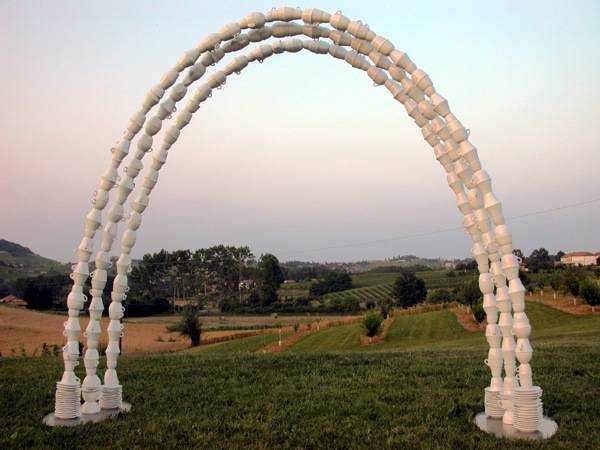
The name of that cup also shows the family’s importance. Many of our cups are named after Italian cities, while others carry family names. For instance, our bestselling cup Ottavia is named after my sister, and Costantino is the name of one of her sons.”
How expensive is it to maintain production in Italy?
“It’s too expensive,” jokes Amedeo. Porcelain is always a product requiring a lot of human labour.
Today, counting employees, agents, and external collaborators, we are about 170 people.”
How are you celebrating the 70 years of activity?
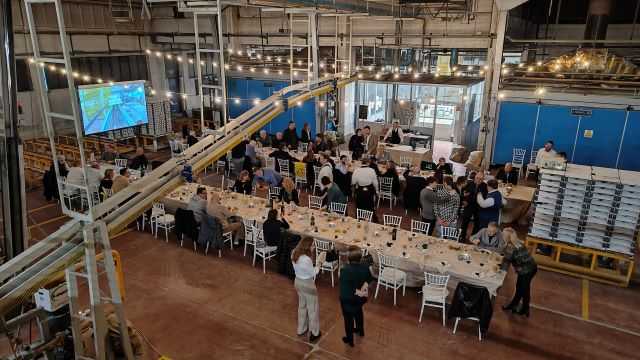
“We already held a dinner for our closest collaborators and friends inside the factory, among the kilns: it was a very evocative setting! We will continue to celebrate at various international events—Geneva in June, Paris in September, and Germany in January.
Additionally, we created a video in partnership with CoffeeandLucas to share our story, including some never-before-seen footage:
https://www.instagram.com/p/DJjjuBEpxWj/
Finally, we will be giving away a special cup called “Settanta” (Seventy) and launching three new family of cups.”
The next 70 years of IPA?
“I hope that in the long term, IPA will continue with its Made in Italy, technological innovation, local development, and strong family character. We want to keep innovating in response to new needs and trends: even now, the coffee world wants to transform something as traditional as the coffee cup.”