

Share your coffee stories with us by writing to info@comunicaffe.com.
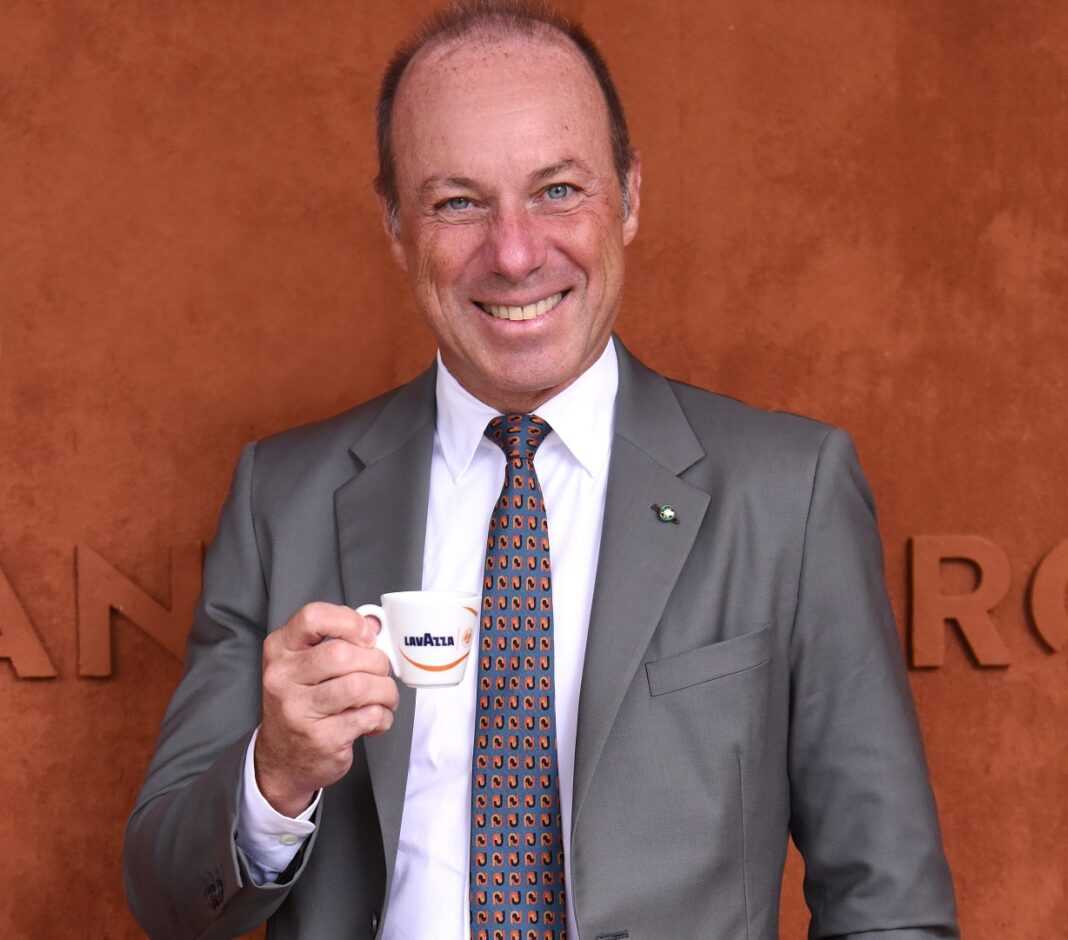
MILAN – Speaking to journalists during an event on the sidelines of the Wimbledon tennis tournament yesterday, Wednesday 9 July, Giuseppe Lavazza, President of the Lavazza Group, expressed optimism about prices, but pessimism about the Eudr, so much so that he even asked for a new postponement of the entry into force of the European legislation on deforestation.
Mr Lavazza said: “We think that the market reached a peak at the beginning of this year.

High prices have not dented the “strong trend” of UK consumers turning to beans to make fresh coffee at home, which began when the pandemic closed cafés but has showed no sign of slowing even now.
The UK retail coffee market, valued at £1.7 billion ($2.31 billion), has seen at-home consumption rise by 5.7% on the year to date as consumers shift from café to kitchen, Lavazza said.

According to statistics, British households drink 13 million cups of Lavazza coffee and use 1.4 million capsules every week.
Sales of Qualità Rossa, the most popular brand of the Turin-based coffee roaster, were £10 million ($13.59 million) in the first five months of this year.
Mr Lavazza also announced the launch in the UK next year of Tablì, the company’s new coffee system, which uses coffee tabs that are individually completely free of packaging.
Lavazza then pointed his accusing finger at the speculation of hedge funds and other financial players, the main culprit – in his opinion – for the 80% surge in prices.
The price rises are certainly the result of the “perfect storm” unleashed on the markets by the drought in Brazil and Vietnam, and the intertwining of logistical and geopolitical problems.
However, the action of hedge funds “really made a difference”. “Coffee is a big market, but the futures market is a small one. So with [a small amount of] money, you can create a big, big tsunami,” said Lavazza. “This is not a big risk, but if they win the race, they can gain a lot of money.”
“The volatility and uncertainty that put into the market, it’s really unbelievable . . . for roasters, for traders and even for producers,” he added noting that consumption had fallen by 3.5% over the past two years due to high prices.
Liquidity issues and sharply increased margin requirements have sent some major market players into crisis.
This is the case of Netherlands-based Mercon Coffee Group, one of the world’s largest coffee traders, which declared bankruptcy at the end of 2023.
Lavazza Group, for its part, saw its green coffee procurement costs rise to €1.6 billion last year, up from €600 million in 2018.
Mr. Lavazza said consumer coffee prices had “hopefully” now peaked. However, he added that they could rise again due to the EU’s anti-deforestation legislation and Trump’s tariffs.
He warned that tariffs between the US and coffee-producing countries such as Brazil and Vietnam would be more challenging and push up prices for American consumers.
But this was “manageable” compared with the EUDR. “It’s very tough, because it really puts some very strong limits for European roasters to import good coffee,” Lavazza said. The legislators pushing it “don’t have any idea how our business works”, he added. This is why: “We call that the legislation, especially for coffee, be postponed for another year.”
The proposed law could potentially be more damaging to the coffee market than tariffs, the chairman concluded, adding it would be very difficult for countries like Ethiopia to comply with the new rules due to a lack of clarity around land ownership.
Lavazza’s appeal follows a similar one launched last month by Mondelēz International, parent company of the chocolate giant Cadbury.
However, it clashes with the stance adopted by a number of major food competitors – including Nestlé, Ferrero and Danone – who addressed a letter to the European Commission last month, in support of the Eudr’s regular entry into force.