


Share your coffee stories with us by writing to info@comunicaffe.com.
MILAN – The EU Parliament will vote on Wednesday 17 December on a provisional political agreement with Council on a one-year postponement of the EU Deforestation Regulation (EUDR) for all businesses. Large operators and traders will have to apply the regulation from 30 December 2026, and small operators – private individuals and enterprises with less than 50 employees and an annual turnover below €10 million – from 30 June 2027.
The agreement also reduces the obligations on micro and small primary operators, which will only have to submit a one-off simplified declaration, making it easier for businesses to comply with the law without compromising its objectives. The responsibility for submitting a due diligence statement will fall on the company first placing the relevant product on the EU market, and not on those that subsequently commercialise it.

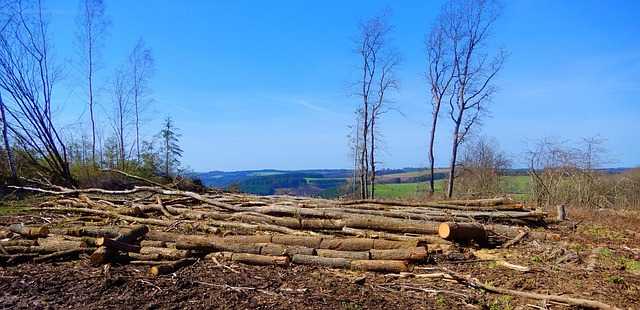
The original EUDR regulation was adopted by Parliament on 19 April 2023. It seeks to fight climate change and biodiversity loss by preventing deforestation linked to EU consumption of cocoa, coffee, palm-oil, soya, wood, rubber and cattle products.
The United Nations Food and Agriculture Organization (FAO) estimates that 420 million hectares of forest – an area larger than the EU – were lost to deforestation between 1990 and 2020. EU consumption is responsible for around 10% of global deforestation. Palm oil and soya account for more than two thirds of this.

On Monday, coffee futures prices fell to their lowest levels in months. In New York, the ICE Arabica contract for March delivery lost a further 2.4% (-9 cents), closing at 360.30 cents: the New York benchmark had not reached such low levels since the third week of September.
London saw an even greater decline: the ICE Robusta most active contract for March delivery fell by 1.9%, closing at $3,923 — the lowest level since 13 August. Several factors are helping to ease market tensions.
Firstly, the weather situation in Brazil has improved: Brazil’s largest arabica coffee-growing area, Minas Gerais, received 79.8 mm of rain during the week ended December 12, or 155% of the historical average, according to Somar Meteorologia. According to weather forecasts, intense and persistent rainfall is expected this week in Brazil’s coffee-growing regions.
Conab has revised its official estimates for the 2025/26 harvest (ended in October) upwards, while the first estimates for the next harvest (2026/27) are beginning to emerge, painting a fairly positive picture.
The impact of recent bad weather in Vietnam is yet to be fully assessed. The influential Vietnam Coffee and Cocoa Association (Vicofa) still forecasts a 10% recovery in production and exports grew by 39.1% in November compared to the same month last year.
On the political front, the lifting of US tariffs on Brazilian coffee imports – in addition to the almost certain postponement of the entry into force of the EUDR – are also loosening the grip on the market.
Following the latest estimates for this year’s crop in Brazil from Conab and USDA, the very first tentative forecast for 2026/27 are coming up. According to Brazilian agricultural analyst Hedgepoint Global Markets, the rains in October and November favoured the flowering of Arabica, while the development of the Robusta crop is progressing positively, although it is expected to be lower than the record harvest of 2025/26.
The initial estimate for Arabica production is between 46.5 and 49.0 million bags, compared to 37.7 million in 2025/26.
This therefore points to a production increase of between 23.3% and 30% for Arabica, made possible by on- cycle, the entry into production of new areas, good agricultural practices and favourable weather conditions from mid-October onwards, which allowed for a second flowering, raising production expectations, although productivity is still uneven across regions.
The Robusta harvest, on the other hand, is expected to come in at between 24.6 and 25.4 million, compared to 27 million in 2025/26, with a reduction of between 8.9% and 5.9%.
The partial physiological decline, after this year’s exceptional harvest, will be partially offset by the entry into production of new areas and tree renewal.
Based on these figures, Brazil could therefore produce a total of between 71 and 74.4 million bags next year, according to Hedgepoint, compared to 64.7 million this year.
Meanwhile, investments in new production areas continue, which will bring visible results in the coming years.