


Share your coffee stories with us by writing to info@comunicaffe.com.
BONN, Germany – Through the Global Coffee Platform (GCP), leading coffee companies and the German Federal Ministry for Economic Cooperation and Development (BMZ) have joined efforts to improve smallholder farmers’ livelihoods, climate resilience, and the sustainability of coffee supply chains in Kenya and Uganda.
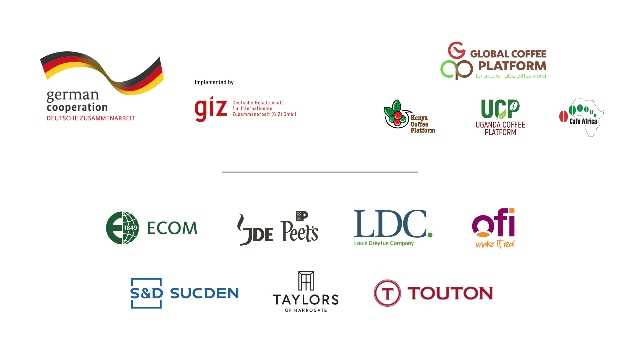
The commitment announced by the platform sees private sector GCP Members – ECOM, JDE Peet’s, Louis Dreyfus Company, ofi (Olam Food Ingredients), SUCDEN, Taylors of Harrogate and Touton – expanding collective action by working with the Sustainable Agricultural Supply Chains Initiative (SASI). SASI is funded by BMZ and implemented by the Deutsche Gesellschaft für Internationale Zusammenarbeit (GIZ) GmbH.

The collective €2 million investment builds on GCP’s previous initiatives to tackle root causes that prevent coffee farmer’s prosperity to reach an additional 18,000 farmers across both countries.
According to GCP Executive Director, Annette Pensel, BMZ’s support has been key to de-risk the private sectors’ investments addressing locally prioritized sustainability challenges that ultimately ensure the future of East African coffee.

“This program sees major coffee companies pooling targeted investments, looking beyond their individual interests to benefit the broader national coffee sectors. It represents a critical step forward in how the sector can work together and maximize investment for expanding sustainable coffee farming,” said Pensel.
Tackling systemic challenges
Smallholder coffee farmers in Kenya and Uganda earn significantly less than a living income, leaving them ill-equipped to address climate change impacts and prepare for European Union regulations. Together, these systemic challenges present a significant hurdle to meeting importing markets’ requirements.
They also increase the risk of next-generation farmers leaving the sector, threatening future supply and long-term economic viability.
To respond, the program will further pilot and expand innovative solutions for bridging the gap in last mile extension services to reach farmers not currently serviced by sustainability schemes or programs.
In Uganda for example, work will build on the GCP Collective Action Initiative “Youth for Coffee” to grow the pool of entrepreneurial youth businesses that provide rehabilitation, rejuvenation, and agroforestry services. Working with a broader group of private sector companies not only increases the geographic reach of Youth Business Units to cover more sourcing regions, but also provides a path for the entrepreneurs’ long-term sustainability by linking with existing supply chains and developing a future client base for their services.
GIZ highlights that the program supports the global efforts of the Sustainable Supply Chains Initiative (SASI) to improve social, environmental and economic conditions along agricultural supply chains.
“We welcome this significant step from some of the world’s largest coffee roasters and traders who have committed to working together to test ways to expand the reach of sustainable coffee farming practices and knowledge in a region with strong potential.” Saskia Widenhorn, Project Manager at GIZ
Work has already commenced and will run through 2027. GCP-affiliated Country Platforms in Kenya and Uganda will lead program coordination and ensure lessons learned feed into national coffee discussions for even broader impact.
“By working through national multi-stakeholder platforms at origin, we can ensure that learnings and results are shared back with the sector to inform best practices and help scale efforts,” said Pensel.
This program, she said, represents an important step in addressing the long-term needs of a sustainable coffee sector in both Kenya and Uganda, in line with each country’s GCP Collective Action Plan for Farmer Prosperity.
“Ultimately, we aim to help usher in the transformational change the sector needs by demonstrating how working collectively can efficiently increase sustainable coffee production –to support both current and future sourcing needs.”
Learn more here.
About Global Coffee Platform
Global Coffee Platform (GCP) is a multi-stakeholder membership association dedicated to advance coffee sustainability towards the vision of a thriving, sustainable coffee sector for generations to come.
GCP enables coffee producers, traders, roasters, governments and NGOs to align and multiply their efforts and investments, collectively act on local priorities and critical issues, scale local sustainability programs and grow the global market for sustainable coffee across the coffee world. United in the belief that coffee sustainability is a shared responsibility, GCP Members and GCP’s Network of Country Platforms work together to achieve transformational change on prosperity for coffee farmers by 2030. For more information, visit www.globalcoffeeplatform.org
About Deutsche Gesellschaft für Internationale Zusammenarbeit (GIZ) GmbH
Deutsche Gesellschaft für Internationale Zusammenarbeit (GIZ) GmbH is a global service provider of international cooperation for sustainable development and international education. GIZ has more than 50 years of experience in a wide range of fields, from economic and employment promotion to energy and environmental issues to the promotion of peace and security.
As a non-profit federal enterprise, GIZ supports the German government, in particular the Federal Ministry for Economic Cooperation and Development, as well as many public and private clients in around 120 countries in achieving their goals in international cooperation. To this end, GIZ works with its partners to develop effective solutions that offer people prospects and permanently improve their living conditions. For more information, visit www.giz.de
About the Sustainable Agricultural Supply Chains Initiative (SASI)
The Sustainable Agricultural Supply Chains Initiative (SASI), is funded by the Federal Ministry for Economic Cooperation and Development (BMZ) and implemented by the Deutsche Gesellschaft für Internationale Zusammenarbeit (GIZ) GmbH. The initiative consists of multiple projects that work towards an economically, socially, and environmentally sustainable transformation of global agricultural supply chains.
In collaboration with politics, private sector, and civil society, SASI puts sustainability topics on the agenda and shapes political discourse. SASI supports the implementation of EU regulations and highlights opportunities within this framework.
It promotes corporate responsibility that goes beyond legal requirements. SASI addresses key challenges across various supply chains. The focus areas include corporate due diligence and sustainable production, living income and living wages, deforestation-free supply chains, gender equality, and digitalization. For more information, visit www.sustainable-supply-chains.org