
Share your coffee stories with us by writing to info@comunicaffe.com.
MILAN – The launch of the first Honduran coffee certified as carbon neutral, organic, and fair trade in Europe, which took place at the HostMilano trade fair, is still fresh in our minds. Now we return to discuss it with the many key players who contributed to developing this important project, a concrete example of traceability and sustainability in a fragmented supply chain.
By Adriana Bustamante Romero – Sustainability Manager, INLOHER Coffee Exports Europe
Traceability? Don’t tell me about it — prove it from the farm to my cup.
“In an industry where sustainability is often spoken more than practiced, traceability has
become the turning point that defines the future of coffee.

It is not a code nor a compliance formality — it is a promise of integrity.
The launch of the first Honduran coffee certified Carbon Neutral, Organic and Fair Trade in Europe marks a before and after for responsible value chains. It proves that a verifiable, profitable, and profoundly human system is possible — one where every link, from farmer to consumer, shares purpose and value.

From the Origin: The Voice of Producers
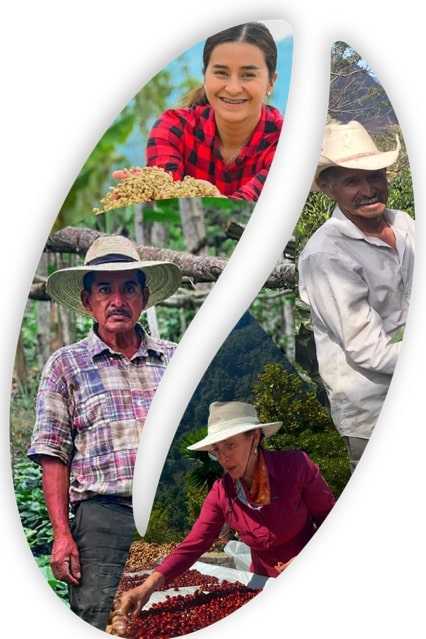
The Honduran Sustainable Coffee Producers Group (PROHCAS) stands at the root of this
achievement.
“Being part of this model has given us visibility. We feel that our commitment to caring for
the land, cultivating responsibly, and maintaining sustainable practices is finally
recognized. Knowing that our coffee reaches Europe carrying our story — and that it is
now Carbon Neutral certified — fills us with pride. Most importantly, we have a voice in this
process.”
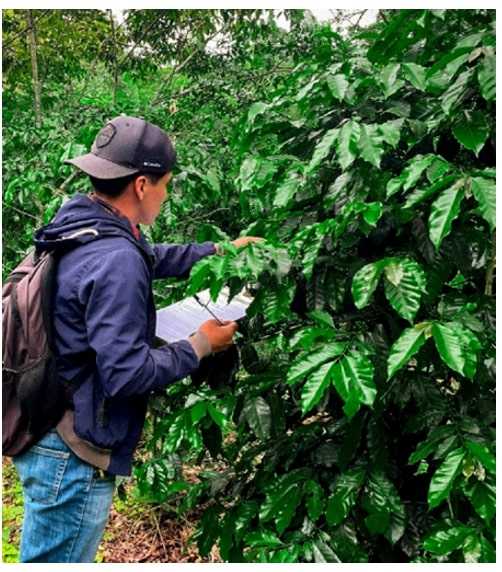
PROHCAS farms combine tradition with technology: certified agroforestry systems, natural
biofertilizers, protection of water sources and native forests.
Through digital monitoring and georeferencing, each lot is tracked and verified, ensuring
full compliance with the new European Deforestation Regulation (EUDR).
INLOHER: From Processing to Export
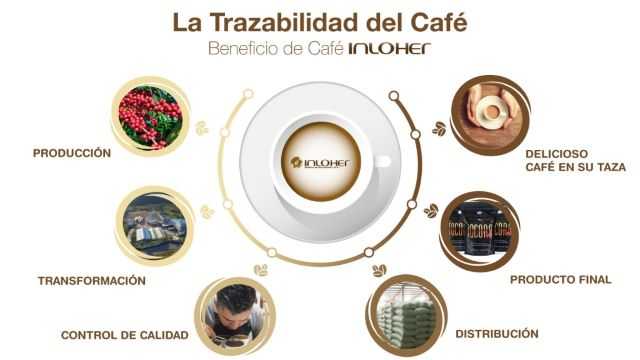
Based in Lepaera, Lempira, INLOHER Coffee Exports has led the transformation of
Honduran coffee towards a regenerative model.
Its Carbon Neutral certification, granted by CTG Certificaciones Técnicas Globales,
crowns seven years of continuous effort — from measuring and reducing emissions to
compensating through agroforestry systems and forest plantations.
Key actions include:
– Efficient water use and recycling in ecological wet mills.
– Renewable energy for drying and classification.
– Complete wastewater treatment.
– Gradual reduction of fossil fuels.
– Mixed plantations of native trees and shade-grown coffee.
These actions are complemented by Organic (Mayacert) and Fair Trade (FLO-Cert)
certifications, integrating environmental, social, and economic sustainability in one unified
value proposition.
“Exporting the first Honduran coffee with triple certification is not a title — it’s a starting
point. When every actor commits, traceability becomes a real tool for transformation,”
explains INLOHER.
Best Coffee Srl: The Guardian of Quality and Trust
At the heart of Europe’s logistics system, Best Coffee Srl plays a key role as the modern
green coffee importer — not just a buyer, but a custodian of integrity and transparency.
“Today, the importer cannot simply be an intermediary. We are the guarantors of quality,
ethics, and transparency. We follow every phase, from the selection of Honduran farms to
the containers’ departure for Italy,” Best Coffee explains.
Working with cooperatives that adopt regenerative agricultural practices and carbon
compensation systems, Best Coffee ensures that every lot is documented, measured, and certified.
Each step — cultivation, processing, shipping, and storage — is verified, allowing
European roasters to access a fully traceable and accountable coffee.
“Being an importer today means building relationships, not transactions. It means fostering
trust, regenerating soils, and ensuring that economic value remains where the coffee is
born.”
This model generates shared value across three dimensions:
– Environmental: CO₂ reduction and offsetting, biodiversity preservation.
– Social: empowerment of women and youth, training, and rural development.
– Economic: long-term commercial stability, client loyalty, and access to premium
markets.
“Carbon Neutral coffee is not just a sustainable product; it is a collective story that unites
producers, certifiers, importers, and consumers in one shared vision of the future.”
Especially Coffee: The Art of Roasting with Purpose
In Alba, Piedmont, Luca Paolucci, founder of Especially Coffee Roaster, represents the
perfect blend of science, art, and ethics.
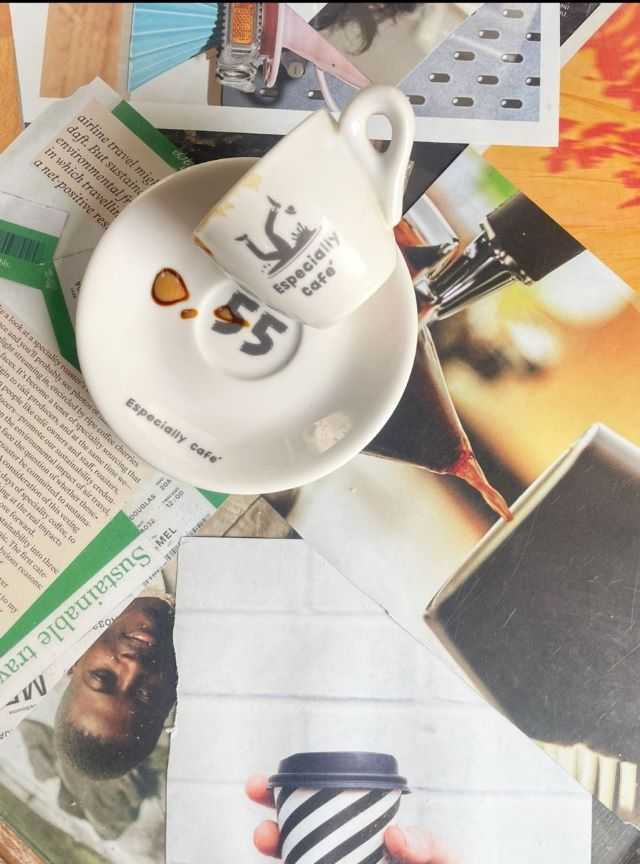
“A certified and traceable supply chain is the result of a collective decision — to offer
coffee that speaks of quality and responsibility. Working with INLOHER and Best Coffee
means embracing a model where every actor has a name, a face, and a purpose.”
He highlights that sustainability doesn’t end at the farm — it extends to the cup:
“Carbon Neutral coffee requires a systemic approach. From renewable energy in roasting
to compostable packaging, every choice matters. We’ve reduced plastic use, adopted
clean energy, and share the story behind every bean with our customers.”
“Modern consumers seek authenticity. When they know who grew their coffee, when it was harvested, and how it was processed, the experience transforms. Taste becomes identity.”
“Each country has its own challenges, but the essence of this collaboration —
transparency, respect, quality — is universal. The Honduran experience proves that true sustainability is possible when the supply chain acts as a community, not a marketplace.”
The Consumer’s Voice: A Coffee that Tells Stories
Federico Bosco, sommelier at Tota Virginia Restaurant, closes the circle:
“Coffee, like wine, is a universe of nuances. I’ve discovered that behind a traceable coffee
there are people, values, and conscious decisions. I prefer to invest in products that
respect those who produce them and invite me to explore authentic flavors. That’s the
difference between drinking coffee… and living it.”
Conclusion
Traceability is not a trend — it is the new language of value.
When every actor — from producer to consumer — recognizes themselves as part of one
story, coffee stops being a commodity and becomes an ethical, cultural, and economic
experience.
INLOHER, together with Best Coffee, Especially Coffee, and PROHCAS, proves that
sustainability is profitable when it is shared — and that true innovation in coffee lies not in
technology or packaging, but in collective coherence.
“If the future of coffee wants to be sustainable, it must start by being traceable. And if it
wants to be traceable, it must be profoundly human.”