


Share your coffee stories with us by writing to info@comunicaffe.com.
Alessandro Carosi, a freelance barista and trainer, was born in Italy in San Benedetto del Tronto but has been living abroad for 23 years in Australia, Japan, New Zealand, Thailand, Scotland, and now England.
He began working in the coffee world in Perth, Australia, where his passion for the coffee bean was sparked, allowing him to travel and live in countless countries, mainly in Asia. Carosi shared with us his experience of two months volunteering on a coffee plantation in Chiang Mai, Thailand, with the Lahu community.

The Lahu are an indigenous ethnic group living in the mountainous regions of the Golden Triangle, where Thailand, Myanmar, Laos, and China meet. Below, we read the account of the journey.
Volunteering in Thailand
by Alessandro Carosi
MILAN – Like every coffee lover at some point the dream is to be able to spend some time on a farm to understand how coffee is born and grows and that will ends up on café tables in liquid form and which many of us love especially in the morning,

I am passionate about Asia and Thailand so I looked for a farm that combined coffee with a more sustainable approach and after months of research and thanks to websites such as Wordpackers and Workaway I came across this eco-sustainable plantation, Suan Lahu coffee farm run by the Lahu community in their own territory in the mountains between Chiang Mai and Chiang Rai.
The Lahu are an indigenous ethnic group residing in the mountainous regions of the Golden Triangle, where Thailand, Myanmar, Laos and China meet, they have a rich cultural heritage, a distinct language and a history of resilience, balancing traditional customs with modern influences, in Thailand, the Lahu community is concentrated in Chiang Rai and Chiang Mai where they have become known for their agricultural skills, particularly in coffee cultivation.
Once dependent on subsistence farming and opium cultivation, many Lahu farmers have switched to coffee thanks to sustainable farming initiatives and projects introduced by the royal family around 1970, initiated by King Bhumibol who wanted to find a way to replace the opium cultivation that was rampant among the Lahu in the so-called Golden Triangle between Thailand, Myanmar, Laos and China.

It was a success. To give you an idea, in most countries in the world that grow coffee the average age of a farmer is now between 40 to 60 with more and more young people moving away from something that does not allow them to earn a decent living.
In Thailand it is the opposite. It is also true that King Bhumibol introduced a 90% tax on imported coffee, the second highest after India, and with domestic demand exceeding production, Thai farmers are in an advantageous position compared to other countries.
When I travel I inform myself since I like to discover the reality I am going to immerse myself. Once I arrived, I started reading some articles about the Lahu who were hosting me. I found a particular interesting article from National Geographic where they interviewed the manager of the farm where I was volunteering (https://www.nationalgeographic.com/travel/article/thai-hill-tribe-teaching-coffee-making-travellers).
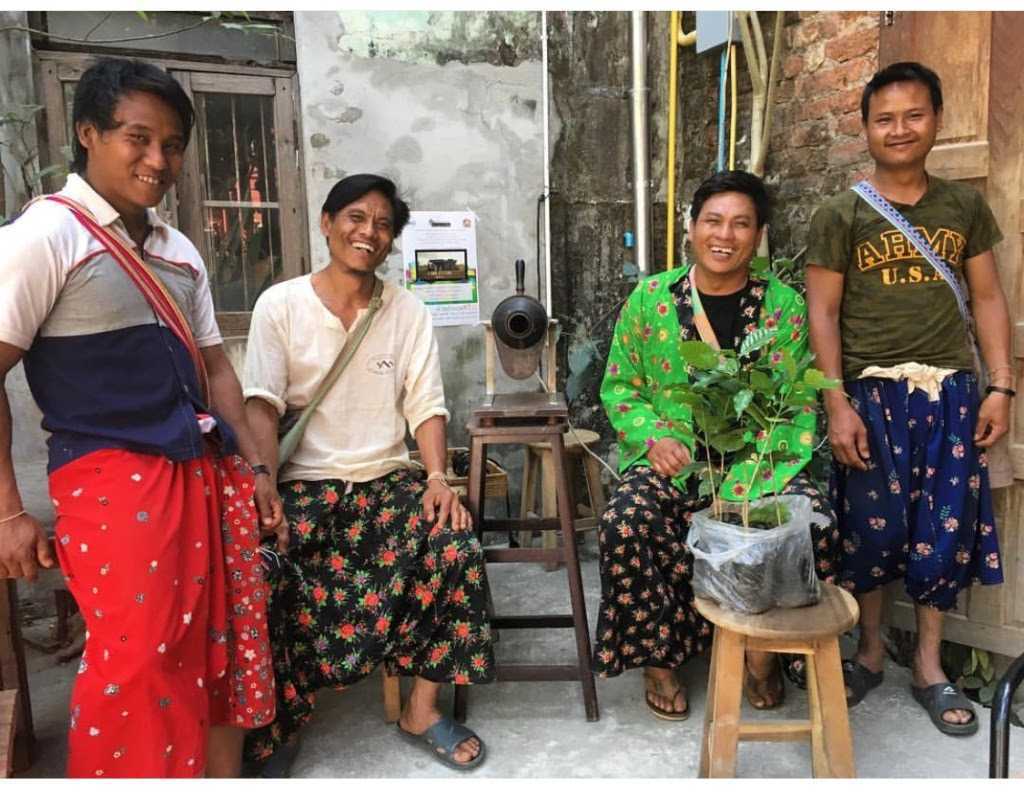
A fascinating fact is that the Lahu are a matriarchal community and once a couple gets married the man goes to live in the village of the wife.
They are the only culture in the whole country, and among the other tribes, where men and women have equal rights, the heavy work is done by the men but in the house, cleaning, cooking and control and education of the children is shared equally by man and woman, talking to Loue the plantation manager explains to me that divorces were much more common in the past than now.
Unfortunately the Lahu language is only spoken but not written, fortunately the internet helps us to discover worlds whose stories we would never have known, but how many wonderful cultures of the past with civilisations much more civilised than us have passed without leaving us any information.
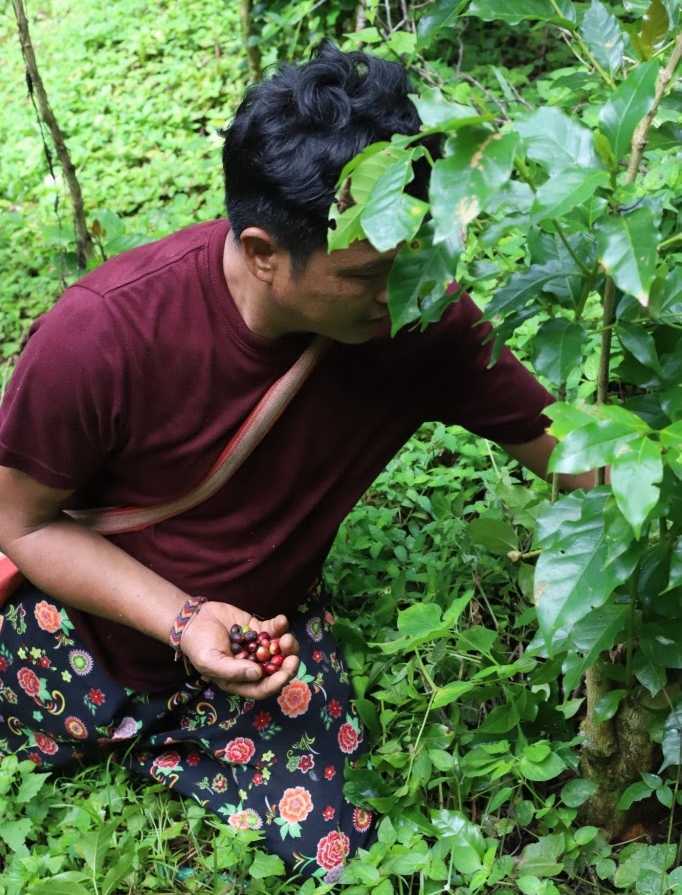
You cannot go back to serving coffee without getting angry when someone tells you that it costs too much after experiencing first-hand the hardships and hard work on a coffee farm and even more so when it is organic and a permaculture method is used, which makes it even more tiring.
The absurd thing about this society is that those who produce and should be put on a pedestal are those considered almost at the last wheel on the cart.
The economic system in which we live is rotten and the concept of economic growth in a small and limited space needs to be reviewed, there is no economic growth without a large segment of the population not being able to enjoy the benefits and in this case it is also the planet that pays a very high price.
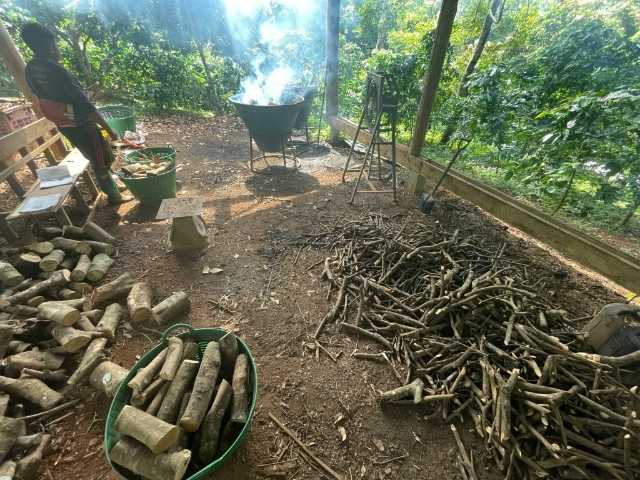
In three weeks volunteering I have been stung by wasps, fever due to who knows what, perhaps due to food or water, slipped collecting wood to make organic fertiliser, Biochar, and pulled a nerve and unable to move for a whole day, encounter with some kind of completely green viper and a cobra, three weeks alone, these growers have to fight with things like this all year round but they will be the ones who get the crumbs of the final profit, this society is definitely to be rewritten, it absolutely must be and without delay.
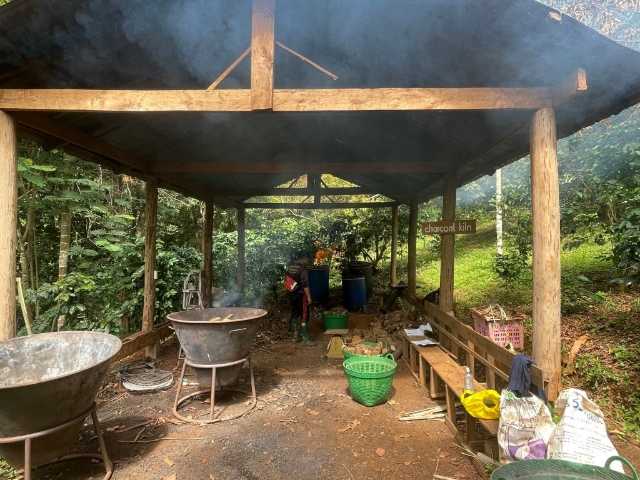
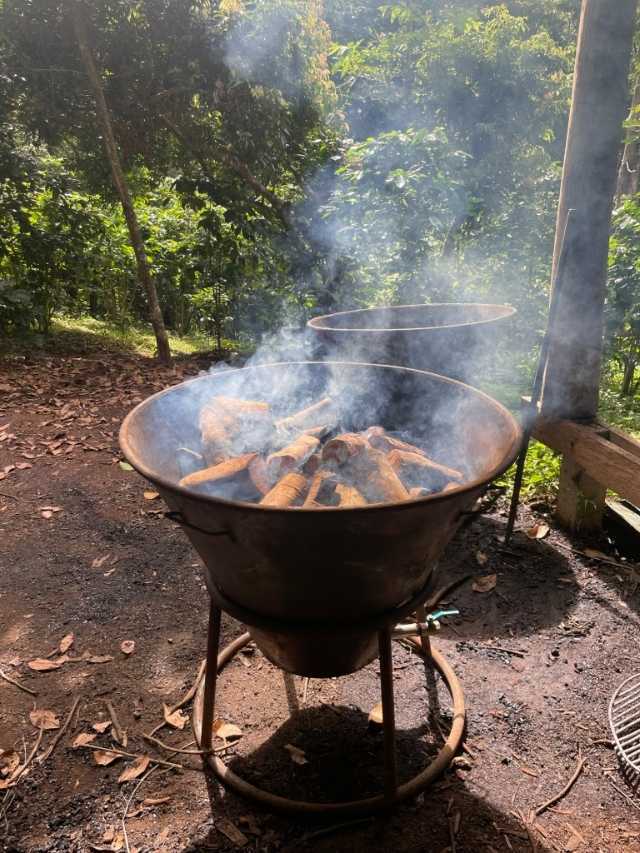
Biochar is charcoal produced as a result of pyrolysis and gasification processes using products/residues of plant origin from agriculture and forestry (brushwood, olive pomace, grape marc, stones, fruit shells, etc.).
This product, as a soil improver, represents a valid solution for sustainable agriculture and climate change mitigation.
In fact, more and more evidence shows the potential of biochar for intelligent biomass management for the benefit of the environment, agriculture and the community.
In particular, the benefits of biochar are as follows:
- valorisation and recovery of agricultural products/residues;
- recovery and improvement of poor soils (reducing acidity, increasing cation exchange capacity, improving nutrient and water retention, etc.);
- reducing leaching processes;
- increased agricultural production yields with reduced needs for water and nutrients (fertilisers);
- increased soil microbial load and support in nitrogen fixation;
- mitigation of climate change through the long-term and stable storage of carbon in the soil.
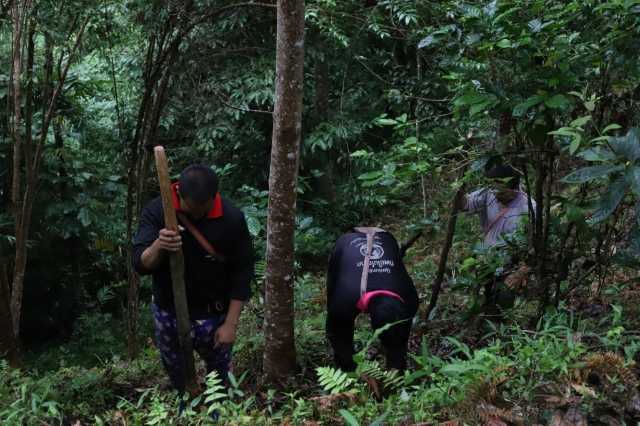
There is a lot of work to be done, from removing weeds, cutting dead branches, removing dead coffee trees, cutting waste wood and transporting it to the Biochar creation warehouse, planting new coffee plants all on the downhill side of the mountain avoiding slipping especially now that it is the rainy season, all the while being careful of snakes and wasps, all this to get to our coffee shops where they will be drunk by customers unaware of all this work.
The experience has enriched me not only on a professional level but also on a human level, getting to know this community is fascinating.
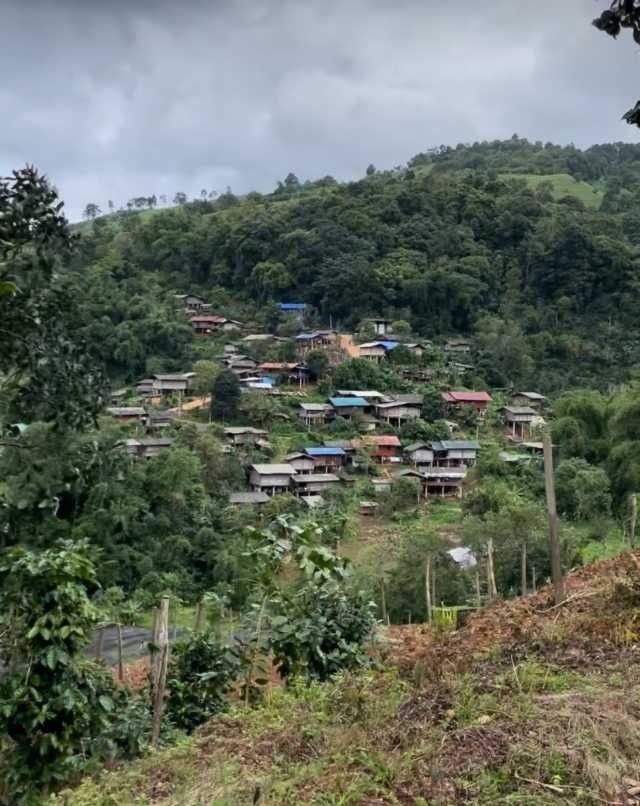
However not all Lahu are the same, the village where I live are black Lahu and their culture and language is different from, for example, the Red Lahu who are a few kilometres away and I was told that in recent decades they have converted to Christianity.
The hill tribe of the Lahu is divided into five subgroups: Red Lahu, Yellow Lahu, Black Lahu, White Lahu and Lahu Sheleh, the Black Lahu being the largest subgroup and constituting almost 80% of the Lahu population.
Lahu is a Tibeto-Burmese language and comprises several dialects, Black Lahu is the most commonly spoken dialect, the language of the Lahu hill tribe does not have a traditional writing system and during this century three Romanisations were introduced by Protestant and Catholic missionaries and Chinese government linguists.
The Lahu hill tribe is a highly independent and diverse ethnic group of about 60,000 people in Thailand, the Lahu are mainly found in Chiang Mai and Chiang Rai provinces, but are also present in considerable numbers in the south, in Tak province, their settlements are usually far from roads and cities, due to their strong commitment to preserving the Lahu way of life.
This is an experience that I recommend to all those who work in the world of coffee, not only to understand the hard work and the amount of work that goes into growing coffee, and even more if it is organic: it is a human experience where you can understand the importance of nature and how we are all one with it, and if respected it can give us great gifts, but at the same time it makes you understand how small you are in comparison.
A tiny wasp makes you run away and stop working if there is the suspicion of a hive nearby, and I can assure you that when 5-6 sting you it hurts, the danger of a landslide, a fall due to wet ground that can lead to a fracture, killer ants that if you are unlucky to end up with your hands or legs will bite you and leave you with a burning sensation, and let’s not forget mosquitoes.
These are just a small part of all that can be a danger. Such an experience elevates you spiritually especially having the opportunity to be in contact with cultures that are different but in the end are like us, they seek love, friendship and inner peace, you understand that we are different but in reality we are all the same.”
Alessandro Carosi
- Website : https://suanlahu.org/
- Facebook : https://www.facebook.com/
SuanLahu - Instagram : @suan_lahu_organic_coffee