

Share your coffee stories with us by writing to info@comunicaffe.com.
MILAN – Algrano is a well known player in the coffee industry, that since 2015, has connected roasters in North America and Europe with coffee producers in Latin America, Africa and Asia, online. It was founded by Gilles, Christian and Raphael, to answer to a seemingly trivial question: How can we improve direct contact between the two ends of the supply chain?
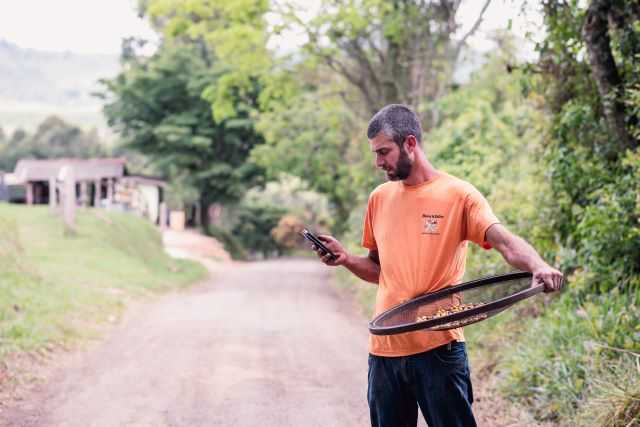
The internet seemed like the most suitable tool. Today, ten years after this initial insight, we are here to discuss the matter with Luiza Furquim, Producer Engagement
Florian Schaffner, Chief Financial Officer Pablo Garcia Jimenez, Quality Control Manager.

Since 2015, Algrano has been the digital platform that connects farmers and roasters directly: how does it work and how has this system of relationships evolved to date?

Luiza Furquim: Algrano operates in two ways. First, we have a marketplace where Verified Sellers, who go through an onboarding process, offer their coffees online. Roasters from Europe and North America can log in and buy. Secondly, we provide Supply Chain Services for producers who already built roaster relationships offline. We help them ship their coffees directly to these roasters, offering support to close the deal.
The Marketplace serves to find new buyers for producers. And Supply Chain Services offer the best buying and post-purchase experience to roasters. It also gives producers more flexibility with logistics without having someone interfere with the relationship.

Coffee producers and organizations decide which coffees they want to offer and at what price. If a roaster wants to negotiate the price or requires a different grade of coffee, our team helps in the process.
Since 2015, things have evolved a lot. Back then, we were strictly a marketplace, and only single farms could offer coffee on the platform. Over time, we expanded to include cooperatives and exporters, as long as the organization is independent—i.e., not linked to a multinational or importing company.
In the past 10 years, we’ve facilitated over 4,000 connections. Not all of these relationships
have lasted. Many small orders from roasters don’t repeat. However, roasters who commit to purchasing larger volumes from producers tend to stay in long-term partnerships.
In 2024, 90% of the volume traded through Algrano was between roasters and producers with an ongoing relationship (more than one year). More than 35% of the volume came from roasters increasing their purchases from the same producers, showing mutual growth and making the relationship even more valuable to both sides.
One of the most encouraging developments in direct trade is that producers are taking more ownership of their sales. Ten years ago, they relied on us to find buyers and engage with them.
Today, they’re doing much more on their own. They are moving beyond the supplier mindset and embracing the role of salespeople and relationship managers, roles traditionally occupied by traders.
That’s why we opened the platform to producers who already have relationships with roasters, allowing them to make offers and manage shipments directly. We’ve seen a growing demand for this type of service in recent years. Many producers come to us not just to find new buyers but to offer a better service to the ones they already work with. It’s a completely different dynamic.”
What are the main difficulties that still exist in direct trade today?
Luiza Furquim: “1. Roasters’ fears around forward buying.
Many roasters are still hesitant to engage in forward buying, where they purchase coffee while it’s still at origin. They’re used to buying spot coffee and fear that they won’t receive the same quality they tasted in the offer sample.
However, in reality, the vast majority of producers deliver the same quality that they offered. Often even better. For the ones who don’t, we offer quality insurance as a safety precaution.
We don’t see many quality claims because producers are professionals with a reputation to
uphold. They understand that their name is on the line, especially when there’s full traceability of the coffee. They don’t want to risk damaging their reputation, which is why they work hard to meet expectations.
2. Market volatility
Roasters who buy directly from producers expect stable prices. While the prices on our platform tend to be twice as stable as those on the futures market, cooperatives and exporters who buy from smallholders still have to navigate the domestic market, which is influenced by fluctuations in the futures market.
When the futures market is volatile, producers can’t simply offer the same price every year
because the price they’re paying to farmers changes. To secure the best quality and retain farmers’ loyalty, they need to offer a premium.
While the futures market is essential for liquidity, it also creates exposure to volatility that harms the people dealing with the actual physical product. This leads to a tug-of-war between roasters waiting for prices to drop and producers hoping for prices to rise, slowing down the process for everyone involved.
3. Financing for producers
When producers export, they face longer payment cycles compared to selling on local markets. As a result, they must finance their coffee for longer periods. With the increasing prices and higher interest rates (as we know, money has become more expensive since Covid), this becomes a compounding problem.
There are also country-specific obstacles to financing. For example, the defaults in Peru last year have made companies less likely to offer contracts to organizations that have defaulted.
Without contracts, producers struggle to secure financing. Similarly, changes in leadership at Banco del Occidente in Honduras have made them less flexible with loan policies, and in Ethiopia, the lack of foreign currency due to the Tigray made foreign currency less available.
The lack of financing prevents many producers from selling more coffee directly. If producers are struggling with cash flow, they can’t afford to wait for payment after the coffee ships. As a result, many farmers sell fewer bags than they could potentially sell. Also, many organizations face difficulties purchasing enough coffee to build their position.
To address these challenges, Algrano offers a pre-payment program called Grower Capital, which is designed to improve producers’ ability to sell directly. When getting financing, producers can better manage liquidity, enhance their bargaining power with both local and international buyers, and ultimately increase their profitability and business growth.
When producers apply for financing through Grower Capital, they fill out a questionnaire where we ask how this program could help them. Nearly 100% of respondents say it improves their bargaining power, helps them manage cash flow, and supports their business growth.”
How did you build your network, in how many countries, and where would you like to expand it further?

Luiza Furquim: “We work with producers in 20 countries, spanning Latin America, Africa, and Asia, and roasters in 32 countries across Europe and North America.
We started with Nicaragua and Brazil, then expanded through trips to origin and partnerships with organizations in coffee-producing countries.
Over time, we also began working with producers who caught our eye for having really strong profiles on the platform. On the roaster side, our focus was on establishing a strong presence in Europe first, and now we’re working on growing in North America.
Even though we don’t have offices outside Switzerland, we have team members spread across the Americas and Africa. Our goal isn’t to become vertically integrated like the big multinationals, building our own dry mills and buying facilities at origin. Instead, we want producers to be more involved in the sales and export process, so they can capture more value from their coffee.
There’s a lot of imbalance in local supply chains, where multinationals have huge financial advantages over local producers. It makes it hard for them to compete. Our mission is to create a more balanced and equal supply chain and that includes the type of presence we have at origin. We’re not traders or suppliers. We’re a service company and a facilitator.
We’ve recently opened the platform to any producer who already has a relationship with or
interest from a roaster. If a producer has someone wanting to buy their coffee, we can help ship it. This has allowed us to open doors to new producing countries we hadn’t worked with before, like Vietnam and the Philippines.
We’re also expanding our services to producers, offering everything from core logistics support to more tailored sales assistance and marketing services. And as we do this, we’ll continue to grow geographically through these services.”
Traceability is now a fundamental requirement, also in view of the EUDR: how are you moving forward in this area?
Luiza Furquim: Traceability has always been a core part of what we do at Algrano. From the
very beginning, we’ve ensured that the producer behind every coffee and the origin of every lot traded on the platform are transparent. We don’t work with trading houses that blend coffee from different regions without traceability, for example, so the origin is always clear.
With the EUDR, there are more technical requirements, and we’ve been focused on collecting and verifying producers’ geocoordinates for over 18 months. At this point, every coffee offered on the platform has been pre-checked by Enveritas and already complies with EUDR regulations.
Not every producer is fully cleared yet, but we’ve created an online tool to help
them identify and resolve any issues with their data before submitting it to us, making the whole process easier for them.
We also display which producers are “EUDR certified” on the platform, and our goal is for 100% of our Verified Sellers to have their data checked, whether they’re targeting the European or US market. We know that regulations like this will only increase, so it’s important that producers are ready to provide the necessary information.
We’ve also made improvements to how producers create offers, making it easier for them to provide traceability. Each offer now has to include the name of the farmer or farmer group behind it, as well as the location of production. So even if an organization works across multiple regions, they can specify exactly where a particular lot comes from.”
Tariffs and price increases, as well as the difficulty of sourcing raw materials, are critical issues. How are you managing them to protect your partners?
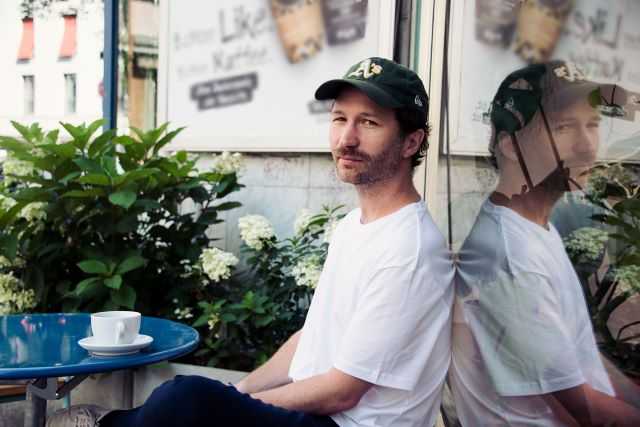
Florian Schaffner: The key piece in recent months has been staying on top of the developments and proactively informing roasters and producers on the different tariffs in place in different origins, and how that may affect our roasters sourcing strategies as well as the strategies from other actors around it including roasters in Europe that will not have to pay the tariff, and on the producer side what such potential shifts might mean for them.
For example, we’ve seen stronger interest in origins like Mexico in recent months, as imports from Mexico are still exempt. There has also been recent chatter that green coffee might be exempt from tariffs as indicated by U.S. Commerce Secretary Howard Lutnick in a CNBC interview on July 29th – this would certainly be a relief, but for now nothing is official.
Beyond that, we also encourage roasters to talk to the producers and work together. Coffee sourced through long-standing relationships are generally less volatile and less pegged to the market, and for roasters and producers that have been working together for a long time, tackling the challenges between roaster, producer and Algrano together has been fruitful.
We’re also piloting new approaches for the volatile environment, insuring roasters and
producers against big price swings by placing maximum or minimum prices.”
Now that the new Coffee Value Assessment has come into force, has anything changed for you in terms of quality assessment?

Pablo Garcia Jimenez: “At Algrano, we’re always looking to align with industry standards, so we’re keeping an eye on how the new Coffee Value Assessment (CVA) develops and how it might fit into the coffee industry.
We’re still using the traditional SCAA Cupping Form for our quality assessments because it’s a well-established standard that everyone in the industry understands. That said, we’ve already been trained to use the new protocol, and we’re open to adapting as the framework evolves and becomes more widely accepted.
Some details of the CVA are still a bit unclear, especially regarding how it compares to the Q Grader system or if scoring will be part of the CVA. However, what’s exciting is that it brings a real opportunity to raise awareness about the value of coffee beyond just the cup quality.
By focusing on extrinsic factors, we can bring more attention to practices that often get
overlooked. We’re particularly excited about how the CVA could help bridge the gap between traditional roasters and newer, more dynamic ones. It would allow us to create reports that cater to both types of roasters’ needs.
We’re open to embracing the CVA, or even creating something hybrid that works for both
roasters and producers. It’s an exciting time, and we’re looking forward to seeing how the CVA will shape the future of coffee. It has the potential to change how we all think about and interact with coffee, opening up new opportunities for everyone in the supply chain.”
How do you see direct trade evolving in the coming years?

Luiza Furquim: “Direct trade is only going to keep growing. We’re already seeing new roasteries start with forward buying right from the start, something almost unthinkable in the past. We’re also seeing more producers travel to buying countries to build their own networks, and events at origin are attracting more roasters.
Because platforms like Algrano exist, roasters know they have a reliable option to buy directly year after year, without having to chase containers from importers who may or may not be available.
Market volatility and traceability requirements are also pushing roasters to buy directly. The spot market has been tight for a while now, which has forced roasters to forward buy. Once they get used to that, direct trade is the next logical step.
It’s easier to stabilize prices over time when you have a relationship with a producer, even if the futures market fluctuates. Not because the producer will always sell cheap, but because they have a wide variety of coffees and grades at different price points, giving roasters more flexibility.
And if roasters consistently pay a premium, producers are more likely to keep their
prices competitive (within the limits of the local market) even if global prices rise.
With EUDR, all coffee will be traceable from now on, which means traceability won’t be as much of a competitive advantage for roasters anymore. In the specialty market, traceability has been a big selling point, but when that differentiating factor isn’t there anymore, what’s next?
The relationship. A real relationship can bring more authenticity to roasters’ brands. There’s a genuine story to tell, with real people behind it, and that will really resonate with consumers.
While roasters still tend to group a lot of practices under the term “direct trade,” they’re gradually starting to understand what a true commercial partnership looks like. It’s not just about traceability or “knowing who the farmer is.” It’s about negotiating prices directly, solving problems together, exchanging ideas, and experimenting with quality innovations.
For example, one roaster who uses Algrano recently worked with a producer to create a custom Arabica-Robusta blend at origin. There’s huge potential in collaborations like that! We’re still only scratching the surface, but there’s so much more to come, and that’s why Algrano works hard to make logistics flexible and financing accessible. This is what keeps us motivated as a company.”