

Share your coffee stories with us by writing to info@comunicaffe.com.
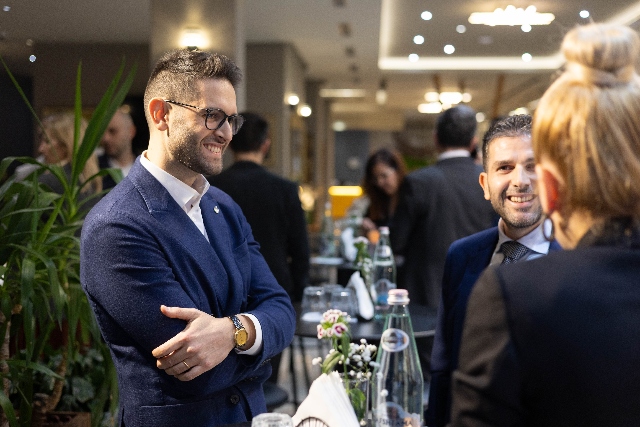
Alessandro Bonasera, accountant, AIS-certified sommelier and coffee expert, has just returned from Vlorë, Albania, where he took part in an event dedicated to the promotion of Italian coffee. The initiative was part of the 10th edition of the Week of Italian Cuisine in the World, promoted by the Italian Ministry of Foreign Affairs and International Cooperation. He shares with us his impressions and key moments from the experience.
The italian espresso in Albania
“On November 20, I had the honor and pleasure of participating in an event to promote The Italian Coffee Style in Vlorë, Albania, held as part of the 10th Week of Italian Cuisine in the World. The initiative was promoted by the Italian Ministry of Foreign Affairs and International Cooperation and organized locally by the Italian General Consulate in Vlorë, led by Consul Achille Provenzano.

The event was part of a four-day celebration of Italian gastronomy, highlighting themes of health, culture, and innovation. One of the days was dedicated to one of the most iconic symbols of Italian food culture: coffee.
The session, titled “Il Caffè all’Italiana”, centered on the presentation of the Guida dei Caffè e delle Torrefazioni d’Italia, the Italian roasteries guide, curated by coffee experts Andrej Godina and Mauro Illiano.

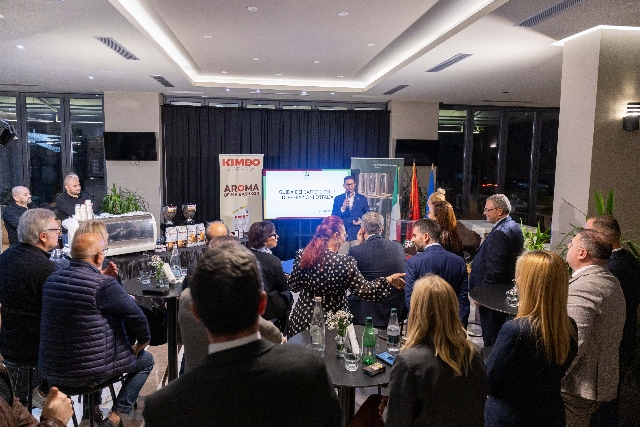
The guide explores the origins and entire supply chain of coffee throughout the Italian peninsula, organized region by region. It features reviews of selected roasteries, offering contact information, a short company profile, descriptions of roasting styles, and detailed flavour reviews of the coffees tasted using different extraction methods. The guide is aimed at those who want to learn more about the world of coffee and those who seek to become more informed and conscious consumers.
During my talk, I guided the audience through a journey into the long and complex coffee supply chain — starting from the producing countries, moving through harvesting methods, roasting techniques and brewing processes. I offered a clear and detailed overview of the aromatic and sensory notes to look for in a cup of coffee, without forgetting the essential role played by small artisanal roasters, long-established family businesses, and the new generation of companies that combine innovation with deep respect for the raw material. While discussing the topic of “caffè all’italiana”, I chose to focus on the iconic brewing methods that embody Italy’s domestic coffee tradition — tools that have become an integral part of our everyday life. From the Neapolitan Cuccuma, an ancient and fascinating symbol of slow ritual, to the Moka pot, a universal symbol of Italian identity, and finally the Espresso method, now globally recognized as an authentic ambassador of Italian taste.
Through practical demonstrations and technical insights, I highlighted how each extraction method is defined by specific parameters such as water pressure, temperature, and percolation dynamics — all key factors that contribute to unique aromatic profiles and shape the sensory character of the final cup. In dialogue with participants, we also addressed some widespread myths — still surprisingly common — about the so-called “correct” ways to prepare a good coffee.
The discussion, always constructive and well-attended, confirmed that coffee is not just a beverage but a shared cultural heritage, a daily ritual that preserves tradition, identity, and memory.
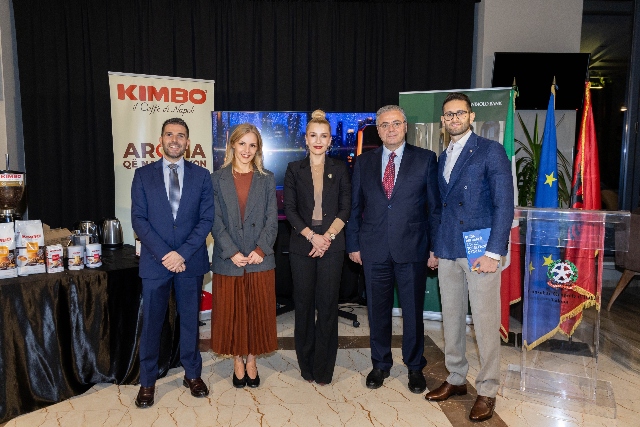
Participants were also invited to test their senses in a comparative tasting of two blends created by one of Naples’ most renowned roasteries, the official partner of the event: Crema Intenso and Extra Crema. Guided step by step, they were challenged to detect differences in flavor, roast level, taste structure, and aromatic development. The tasting experience allowed them to discover nuances often overlooked in daily consumption — such as notes of chocolate, dried fruit or spices — and to better understand how a blend’s composition and roasting curve shape its sensory identity.
The tasting also served as a genuine educational experience: through guided sampling, participants learned to more consciously distinguish the differences between the two main botanical species — Arabica and Canephora (commonly known as Robusta) — by analyzing their body, acidity, aftertaste, and complexity. This hands-on approach offered deeper insight into the relationship between roasting and aromatic intensity, helping the audience understand how each stage of the process impacts the final quality in the cup. Participants were also introduced to the basic criteria for properly evaluating a coffee, equipping them with useful tools to adopt a more critical and informed approach to a beverage so deeply rooted in our culture.
The event skillfully combined education, cultural promotion, and celebration of Italian excellence, showcasing coffee as a key element of national identity — one that tells a story of tradition, innovation, and craftsmanship.
In doing so, the initiative perfectly aligned with the spirit of the Week of Italian Cuisine in the World, a campaign that promotes Italy’s rich gastronomic heritage on the international stage and reinforces the connection between quality production and cultural legacy.
Equally important, this event served as a valuable opportunity for dialogue and exchange between Italy and Albania, made possible through the powerful vehicle of Italian food culture — and, in particular, through the universal language of coffee. It created an open space for sharing knowledge and traditions, where professionals, institutions, enthusiasts, and the simply curious could connect, exchange ideas, and envision future collaborations.
In this context, coffee once again proved to be a privileged bridge: a beverage capable of closing distances, bringing together diverse cultures, and inspiring new forms of cooperation. Its history — which weaves together trade routes, domestic rituals, and technological advancements — stands as tangible proof of how something so ordinary can become a powerful vehicle for international dialogue.
With just a single sip, gastronomic heritage reveals itself as a driver of connection, growth, and mutual appreciation — one that creates opportunities and strengthens our sense of belonging to a wider community. Hopefully, events like this will continue to grow and multiply, helping to spread and enrich coffee culture around the world.”
Alessandro Bonasera